In-House Manufacturing vs Bulk Uniform Manufacturer India: Which Saves More for Large Institutions?
- Last Updated at: Aug 13, 2026
- 7 min read min read
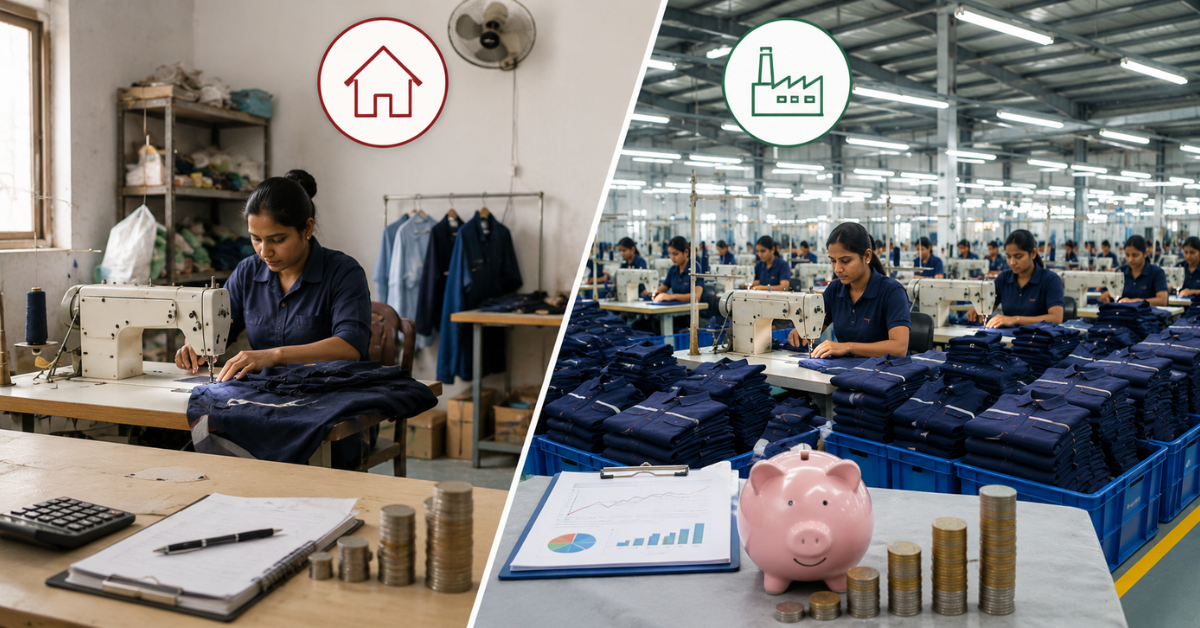
For large institutions, uniform procurement is rarely just about finding the lowest garment price. Schools, hospitals, corporate groups, universities, and large organisations need consistent quality, timely delivery, standardised designs, and reliable replenishment. Partnering with an established bulk uniform manufacturer India such as Mafatlal Uniforms helps institutions weigh these requirements against the actual cost of producing uniforms in-house. The right approach depends on order volumes, infrastructure, workforce, logistics, and long-term supply needs.
In-House Uniform Manufacturing: What Does It Really Cost?
In-house production may appear economical because an institution has direct control over manufacturing. However, setting up and maintaining a dedicated production operation involves several expenses.
The institution may need to invest in:
- Sewing and cutting machinery
- Production-floor infrastructure
- Skilled workers and supervisors
- Fabric and accessory inventory
- Quality-control systems
- Maintenance and equipment replacement
- Packaging and storage facilities
- Logistics and distribution
There are also hidden costs. Machinery downtime, staff turnover, excess inventory, fabric wastage, and seasonal demand can increase the actual cost per uniform. For institutions that do not already have manufacturing infrastructure, building a complete production unit from scratch can require significant upfront investment often more than several years of outsourced supply combined.
Uniform Outsourcing for Institutions: Where Can You Save?
Uniform outsourcing for institutions shifts most of the manufacturing responsibility to a specialised supplier. Instead of investing in production infrastructure, the institution can focus on specifications, approvals, distribution, and employee or student requirements.
A professional bulk uniform manufacturer India like Mafatlal, which has been manufacturing textiles and uniforms since 1905 already has the machinery, skilled workforce, quality systems, sourcing network, and production capacity required for large orders. You can browse ready categories such as corporate uniforms, school uniforms, hospitality uniforms, and industrial uniforms to see the range and finish quality before committing to a bulk order.
This model can offer several financial advantages:
- Lower capital investment – no need to establish a dedicated manufacturing facility
- Reduced fixed costs – production infrastructure and manpower are managed by the supplier
- Better purchasing efficiency – large manufacturers can source fabrics and accessories at scale
- Predictable costing – institutions can plan budgets around agreed production and supply terms
- Scalable production – orders can be increased during admissions, recruitment drives, or expansion
In-House vs Outsourced: Cost Comparison
|
|
|
|
|
|
|
|
|
|
|
|
|
|
|
|
|
|
|
|
|
|
|
|
|
|
|
|
|
|
|
|
|
|
|
|
For institutions with an existing garment manufacturing setup and consistently high production volumes, in-house manufacturing can sometimes make financial sense. For organisations without this infrastructure, outsourcing to a uniform manufacturer for enterprises often provides better overall cost efficiency a trend consistent with India's broader apparel manufacturing sector, where a large share of the country's textile output is decentralised across specialised production clusters rather than single in-house units, according to industry data from the India Brand Equity Foundation (IBEF).
Why Uniform Supply Chain Management Matters
Uniform costs are influenced by much more than production. Uniform supply chain management plays an important role in controlling fabric procurement, manufacturing schedules, inventory, packaging, transportation, and delivery.
For example, an institution operating 100 schools across several states may require uniforms in different sizes and quantities at specific times of the academic year. Poor inventory planning can result in shortages, urgent production, or excess stock.
An experienced supplier can help streamline these processes through planned production and coordinated dispatches. Strong uniform supply chain management therefore reduces operational pressure and unexpected costs. We cover this in more depth in Get a Bulk Uniform Quote from a Manufacturer in India, which walks through how quotes are structured for large orders.
The Advantage of Pan India Uniform Delivery
Large institutions often operate across multiple cities or states. Managing separate manufacturers and logistics partners in each location can create inconsistencies in quality, pricing, sizing, and delivery schedules.
Pan India uniform delivery allows institutions to work with a central supplier while coordinating distribution across multiple locations. This model helps with:
- Standardised fabric and colour specifications
- Consistent sizing across locations
- Centralised quality control
- Consolidated procurement
- Easier replenishment
- Simplified vendor management
For organisations expanding across different regions, pan India uniform delivery becomes an important part of the procurement strategy. Our detailed guide, Pan-India Uniform Supply: Get Manufacturers to Handle Multi-City Delivery, breaks down how multi-city dispatch is planned. Multi-location hospitality groups can also see how this plays out in practice in Source Uniforms for Multi-Property Hotel Chains.
When Should Institutions Choose a Uniform Manufacturer for Enterprises?
A uniform manufacturer for enterprises may be the better choice when an institution:
- Requires uniforms in large quantities
- Operates across multiple locations
- Does not have manufacturing infrastructure
- Needs seasonal or recurring production
- Wants consistent quality across branches
- Requires customised branding or designs
- Needs a scalable supply partner
Mafatlal Uniforms supports organisations looking for structured uniform procurement across different institutional requirements from corporate shirts and trousers and chef coats and hospitality wear to school shirts and industrial workwear. A specialised supplier model makes it easier to manage production, quality, and distribution without building an internal garment manufacturing operation.
Common Mistakes Institutions Should Avoid
Cost savings can disappear when procurement is based only on the quoted garment price. Institutions should also consider:
- Fabric quality and durability
- Minimum order quantities
- Sampling and approval processes
- Replacement and alteration policies
- Delivery timelines
- Packaging and warehousing
- Logistics charges
- Reordering flexibility
A lower unit price may not represent the lowest total cost if the supplier has inconsistent quality or unreliable delivery.
Best Practices for Large-Scale Uniform Procurement
Institutions can improve cost efficiency by following a structured process:
- Estimate annual uniform requirements.
- Separate one-time and recurring requirements.
- Compare total landed cost instead of only unit price.
- Approve fabric, colour, sizing, and design samples.
- Establish quality standards before production.
- Define delivery schedules for every location.
- Plan replenishment and replacement requirements.
- Review supplier performance regularly.
You can start this process by browsing the full product catalogue or submitting your requirement directly through the Bulk Order page.
FAQs
Is outsourcing uniforms cheaper than manufacturing in-house? For many institutions, outsourcing can be more cost-effective because it avoids investments in machinery, production facilities, skilled labour, and maintenance. However, the final decision depends on order volumes, existing infrastructure, production efficiency, and the institution's long-term uniform requirements.
What should institutions consider when selecting a bulk uniform manufacturer India? Institutions should evaluate manufacturing capacity, fabric quality, customisation options, quality control, delivery timelines, pricing, logistics capabilities, replacement policies, and experience with large-volume orders. A supplier's ability to manage recurring requirements is also important.
How does pan India uniform delivery benefit large organisations? Pan India uniform delivery simplifies procurement by allowing institutions to work with one coordinated supplier across multiple locations. It helps maintain consistent colours, fabrics, sizing, branding, and quality while reducing the complexity of managing multiple regional vendors.
What is uniform supply chain management? Uniform supply chain management covers the planning and coordination of fabric sourcing, production, inventory, packaging, transportation, and delivery. Effective management helps institutions reduce delays, avoid shortages, control inventory, and maintain consistency across locations.
Is a bulk uniform manufacturer suitable for schools and enterprises? Yes. A bulk uniform manufacturer India can be suitable for schools, universities, hospitals, corporate groups, and other large institutions requiring standardised uniforms at scale. The model is particularly useful when organisations need recurring production and distribution across multiple locations, whether through a uniform manufacturer for enterprises or a dedicated school uniform partner.
Conclusion
The decision between in-house manufacturing and outsourcing should be based on total cost rather than garment price alone. Institutions need to consider infrastructure, labour, inventory, quality control, logistics, scalability, and administrative effort.
For organisations without established manufacturing infrastructure, a specialised bulk uniform manufacturer India can provide a practical way to manage large-scale production while reducing operational complexity. With structured uniform outsourcing for institutions, efficient uniform supply chain management, and reliable pan India uniform delivery, institutions can achieve greater consistency and cost control.
Mafatlal Uniforms offers a scalable approach for organisations that need dependable uniform manufacturing and supply support across large institutional requirements. Explore our bulk order process to get a customised quote for your institution.