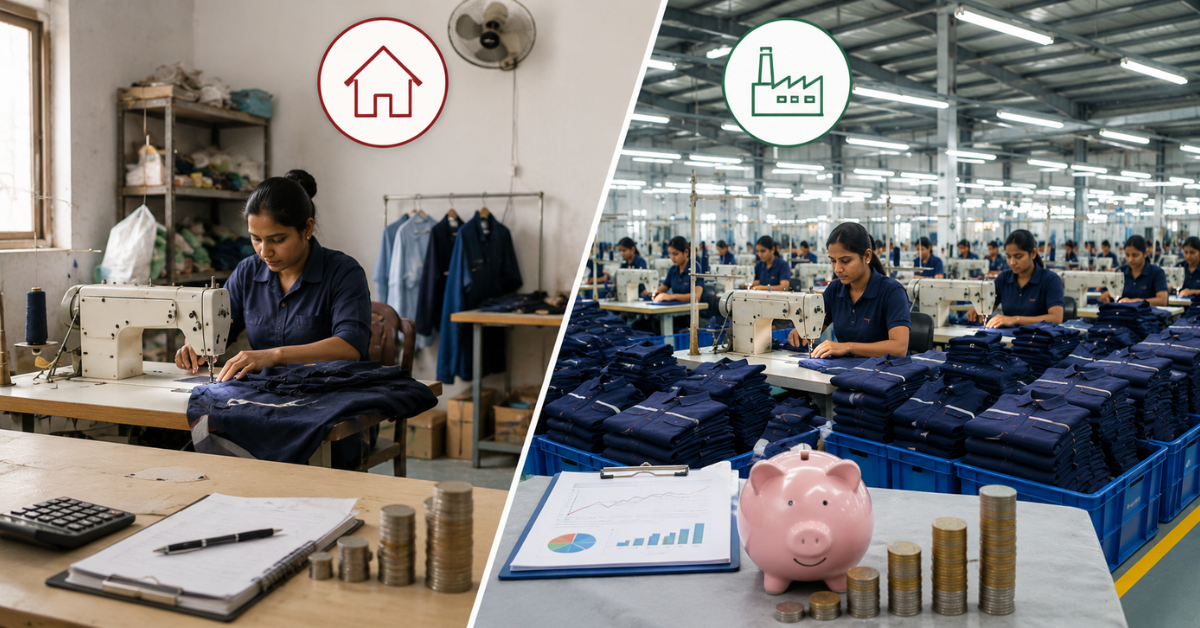
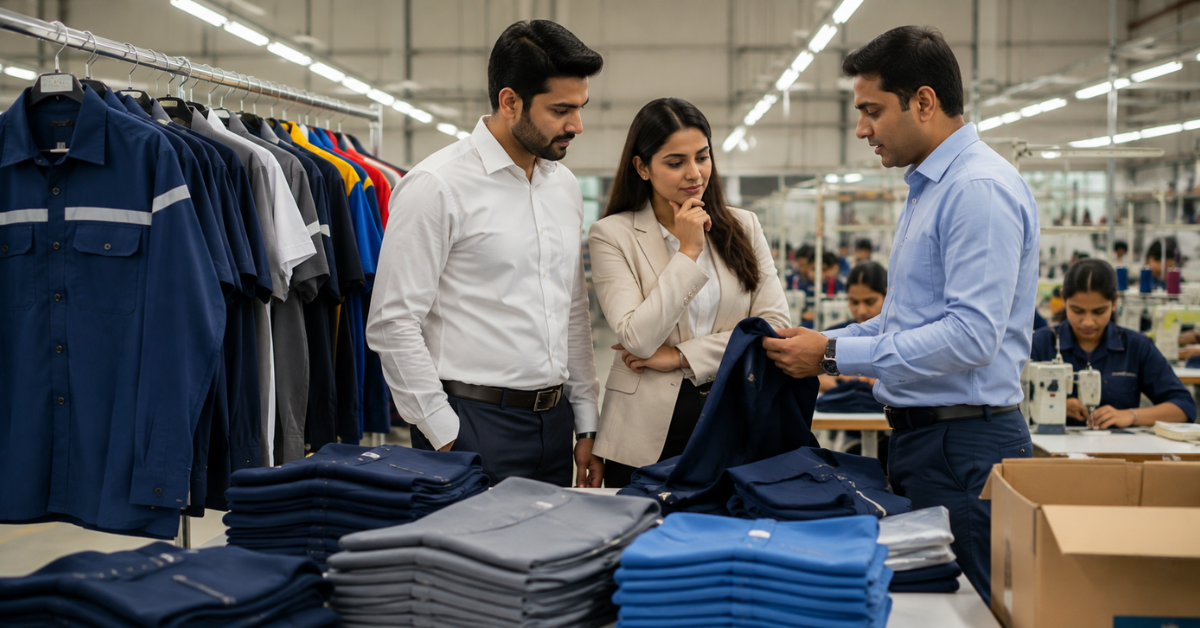
How to Choose Factory Uniform for Workers | Floor vs Office Staff
- Last Updated at: Sep 26, 2026
- 6 min read min read

A production operator working beside machinery and an accounts executive working inside the same factory should not automatically wear the same uniform. Their movement, working conditions, safety requirements, and customer interaction are different. When selecting a factory uniform for workers, businesses should therefore plan uniforms according to job roles rather than applying one design across the facility. Mafatlal Uniforms works with organisations on professional and industrial uniform requirements. This guide explains how factories can differentiate uniforms for shop-floor and office employees while maintaining a consistent company identity.
Why Factory Uniforms Should Be Role-Specific
A good factory uniform for workers needs to support the actual tasks performed during a shift.
Shop-floor employees may spend hours standing, bending, lifting, operating equipment, or moving between production areas. Office employees usually work in more controlled environments and may interact with customers, vendors, or management.
This means a shop floor uniform may prioritise movement, durability, visibility, and role-specific requirements, while office uniforms can place greater emphasis on a formal appearance and brand presentation.
A clear role-based uniform policy can also make different teams easier to identify.
What Should a Shop Floor Uniform Include?
The correct shop floor uniform depends on the factory environment and the hazards identified for each job.
Before finalising garments, an organisation should consider:
- Employee movement
- Machinery exposure
- Workplace temperature
- Indoor or outdoor work
- Shift duration
- Visibility requirements
- Pocket requirements
- Applicable safety requirements
- Washing frequency
For example, an employee working in a warehouse may require a different garment configuration from someone working near production machinery.
An experienced industrial workwear manufacturer should therefore be given detailed information about employee roles before recommending fabric or garment specifications.
How Should Office Staff Uniforms Differ?
Factory office employees may include HR teams, administrators, accounts staff, sales personnel, reception teams, and managers. Their clothing does not usually experience the same physical demands as production workwear.
Office uniforms may therefore include:
- Formal shirts
- Coordinated trousers
- Blazers or jackets where appropriate
- Company colours
- Subtle logo embroidery
- Role-specific accessories
However, office employees who regularly enter production areas may still need to follow the facility's safety requirements while on the shop floor.
This distinction is important when planning a factory uniform for workers across the entire organisation.
Shop Floor vs Office Staff: Quick Comparison
|
|
|
|
|
|
|
|
|
|
|
|
|
|
|
|
|
|
|
|
|
|
|
|
|
|
|
|
|
|
|
|
A worker uniform india programme should also consider local climate, especially where employees work in hot or physically demanding environments.
Choosing Fabric for Factory Workers
Fabric selection can influence comfort, durability, and maintenance. A blue collar uniform supplier should understand whether employees work indoors, outdoors, around heat, or in highly active roles.
For general industrial workwear, buyers should evaluate:
Durability The garment should be suitable for the physical demands and expected washing frequency of the role.
Comfort A worker uniform india programme should consider temperature, shift length, fit, and employee movement. A durable uniform that is uncomfortable for an eight-hour shift may not be practical.
Maintenance Factories should check washing instructions, colour retention, and garment care before placing large orders.
An industrial workwear manufacturer should also be asked whether the same approved fabric and design can be supplied consistently for future requirements.
Safety Should Come Before Branding
A factory uniform can display company identity, but branding should never interfere with required safety features.
A shop floor uniform should be developed after the organisation has assessed workplace hazards and applicable safety requirements. Depending on the role, employees may require additional protective equipment or specialised garments.
A blue collar uniform supplier should therefore receive clear technical specifications from the organisation rather than being asked to create one general-purpose uniform for every employee.
Why Consider Mafatlal Uniforms?
Mafatlal Uniforms works across industrial and professional uniform requirements, where businesses may need different solutions for production workers, supervisors, office teams, and other employee groups.
When developing a factory uniform for workers, organisations can consider Mafatlal Uniforms for factors such as fabric selection, sizing, branding, department differentiation, bulk quantities, and repeat-order planning.
For companies looking for an industrial workwear manufacturer or blue collar uniform supplier, Mafatlal Uniforms can be considered while developing a structured programme that maintains a common brand identity without forcing every employee into the same garment.
Best Practices for Factory Uniform Planning
Before placing an order, factories should:
- Map employee roles by department.
- Identify different working conditions.
- Define safety requirements first.
- Select fabrics according to the role.
- Conduct employee sizing and sample trials.
- Decide colours and branding.
- Plan replacement inventory.
- Document uniform allocation by role.
This process makes a worker uniform india programme easier to manage as the workforce grows.
Common Mistakes to Avoid
One of the biggest mistakes is giving every employee the same uniform simply for visual consistency.
Factories should also avoid choosing uniforms only on price, skipping sample trials, ignoring climate, guessing employee sizes, over-branding garments, and failing to plan repeat orders.
Another common mistake is expecting the shop floor uniform itself to replace role-specific PPE. Uniforms and protective equipment should be selected according to their intended purpose.
FAQs
What is the best factory uniform for workers? The best factory uniform for workers depends on the employee's job, working conditions, movement, workplace hazards, climate, and washing requirements. Factories should define role-specific requirements before choosing the fabric, garment construction, pockets, branding, or other features.
Should factory floor and office staff wear the same uniform? Not necessarily. Shop-floor staff generally need more functional and durable workwear, while office employees may require a more formal appearance. Both uniforms can still use common colours, logos, or design elements to maintain company identity.
How should a factory choose an industrial workwear manufacturer? A factory should evaluate an industrial workwear manufacturer based on fabric options, customisation, sizing, bulk production capability, quality consistency, delivery planning, sample support, and repeat-order availability. Role-specific technical requirements should be clearly communicated before production.
What should a shop floor uniform include? A shop floor uniform should be selected according to the employee's role and workplace risks. Depending on the job, considerations can include durable fabric, comfortable movement, functional pockets, visibility, easy maintenance, and compatibility with required PPE.
What should companies ask a blue collar uniform supplier? A blue collar uniform supplier should be asked about fabric specifications, sizing, sample development, branding, minimum order quantities, production timelines, quality checks, repeat-order consistency, and the ability to accommodate different job roles within one uniform programme.
Conclusion
Choosing uniforms for a factory is not about finding one design for everyone. Production workers and office staff perform different tasks, face different working conditions, and require different levels of functionality.
A well-planned factory uniform for workers should begin with employee roles and workplace requirements, followed by fabric, fit, comfort, branding, and supply planning. By separating shop-floor and office needs while maintaining common brand elements, factories can build a more practical and consistent uniform programme