Custom Uniform Manufacturers India: How to Order Branded Uniforms for Your Business
- Last Updated at: Nov 16, 2026
- 5 min read min read
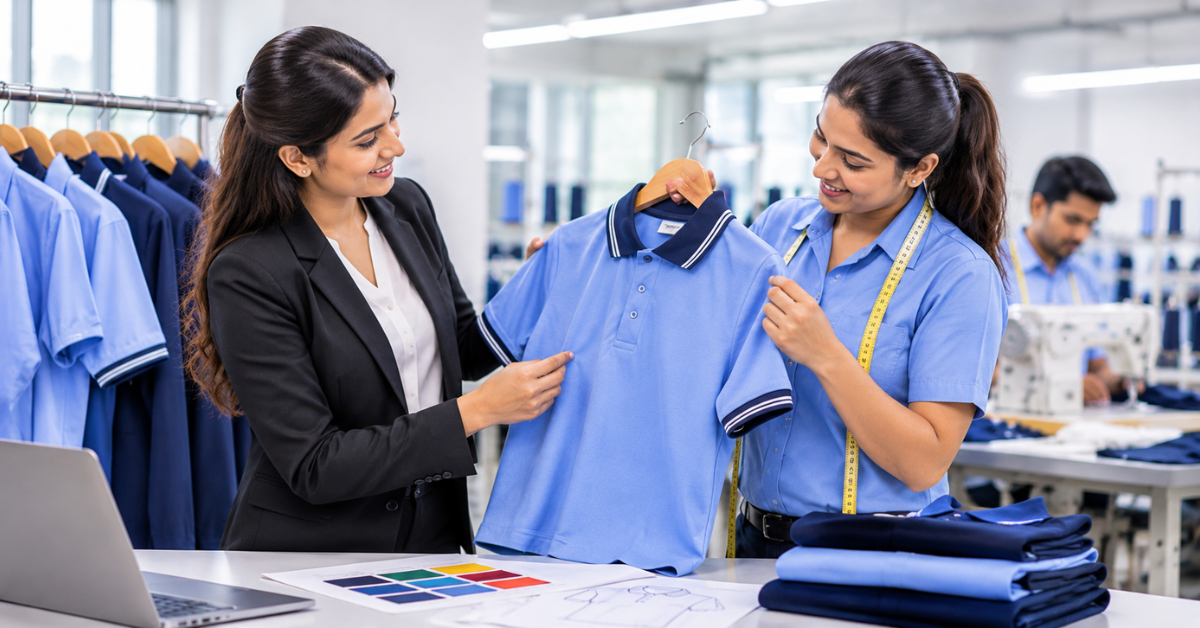
Choosing the right custom uniform manufacturers India can influence employee comfort, brand identity, and long-term purchasing costs. Businesses need uniforms that look professional, withstand regular use, and suit different job responsibilities. Mafatlal Uniforms offers uniform solutions for organisations across industries. This guide explains how businesses can select fabrics, customise designs, evaluate suppliers, and manage bulk orders efficiently.
Why Custom Uniforms Matter for Businesses
Uniforms are an important part of a company’s professional identity. They create consistency across teams and make employees easily recognisable.
Well-designed custom work uniforms offer several advantages:
- Strengthen brand recognition.
- Create a coordinated employee appearance.
- Support department-specific requirements.
- Improve comfort through suitable fabrics.
- Maintain consistency across business locations.
For example, a retail chain may use matching colours and logos across stores while selecting different garment styles for sales and warehouse employees.
Step 1: Identify Uniform Requirements
Before approaching custom uniform manufacturers India, businesses should define their requirements.
A clear purchasing brief should include:
- Number of employees and departments
- Preferred garment styles
- Fabric and colour preferences
- Company branding requirements
- Size distribution
- Budget and delivery expectations
For customized corporate uniforms, employee roles should guide design decisions. Office teams may prefer formal shirts, while operational staff may require more flexible garments.
Step 2: Choose the Right Fabric
Fabric quality influences comfort, durability, and maintenance.
Businesses should compare the following features:
|
|
|
|
|
|
|
|
|
|
|
|
|
|
|
|
|
|
|
|
|
Mafatlal Uniforms can be considered by organisations exploring uniform options for different workplace requirements.
Requesting fabric samples helps procurement teams assess texture, appearance, and suitability before placing larger orders.
Step 3: Finalise Branding and Customisation
Branded uniforms should reflect the company’s identity while remaining practical for everyday wear.
Businesses should consider:
- Company-approved colours
- Logo placement and dimensions
- Embroidery or printing methods
- Garment design and fit
- Department-wise variations
For logo uniforms, embroidery can create a textured appearance, while printing may suit particular fabrics and detailed designs.
The chosen method should be compatible with the garment material and expected washing conditions.
Step 4: Confirm Sizes and Approve Samples
Incorrect sizing is a common challenge in bulk uniform procurement.
Before ordering custom bulk uniforms, organisations should collect employee measurements and compare them with the supplier’s size chart.
Sample approvals should cover:
- Overall garment fit
- Stitching and finishing
- Fabric quality
- Logo accuracy
- Comfort during movement
Mafatlal Uniforms offers professional uniform options that businesses can evaluate according to their workforce requirements.
Step 5: Compare Suppliers and Quotations
When evaluating custom uniform manufacturers India, businesses should compare more than the quoted price.
Important considerations include:
- Minimum order quantities
- Fabric specifications
- Customisation charges
- Sample approval procedures
- Production and delivery timelines
- Repeat-order arrangements
Clear written specifications help prevent misunderstandings and support consistent quality.
Step 6: Plan for Future Uniform Requirements
Businesses should consider employee recruitment, replacements, and expansion when finalising uniform orders.
Maintaining records of approved fabrics, designs, sizes, and branding specifications can simplify future purchases.
For customized corporate uniforms, this approach helps maintain a consistent appearance across departments and locations.
Common Mistakes to Avoid
Organisations should avoid:
- Selecting suppliers based only on price
- Ignoring employee comfort
- Skipping fabric and garment samples
- Ordering without accurate measurements
- Providing unclear branding instructions
- Overlooking future replacement needs
Careful planning helps businesses reduce purchasing errors and manage uniform programmes effectively.
FAQs
1. How should businesses choose custom uniform manufacturers in India?
Businesses comparing custom uniform manufacturers India should evaluate fabric quality, customisation options, garment samples, pricing, minimum quantities, and delivery reliability. Suppliers should provide clear specifications and support sample approvals before production begins.
2. What are the advantages of branded uniforms?
Branded uniforms create a consistent professional appearance and help customers recognise employees. They also reinforce company identity across departments and locations. Businesses should balance visual branding with fabric comfort, practical garment design, and everyday maintenance requirements.
3. Can businesses customise uniforms with company logos?
Yes, logo uniforms can include company branding through embroidery or printing. The suitable method depends on fabric, logo complexity, garment design, and washing requirements. Businesses should approve branding samples before confirming production.
4. What should businesses check before placing bulk uniform orders?
Before purchasing custom bulk uniforms, organisations should confirm fabric specifications, employee sizes, branding details, order quantities, sample approvals, pricing, and delivery schedules. Written documentation helps reduce errors and simplifies future repeat orders.
5. Which industries commonly use custom work uniforms?
Custom work uniforms are commonly used in corporate offices, retail businesses, hotels, manufacturing facilities, and service organisations. Garment requirements depend on employee responsibilities, workplace conditions, branding preferences, and applicable safety standards.
Conclusion
Selecting custom uniform manufacturers India requires attention to fabric quality, garment design, accurate sizing, branding, and supplier reliability. Businesses should approve samples, compare complete quotations, and plan future requirements. Mafatlal Uniforms offers uniform solutions for organisations seeking practical, professional, and coordinated employee clothing