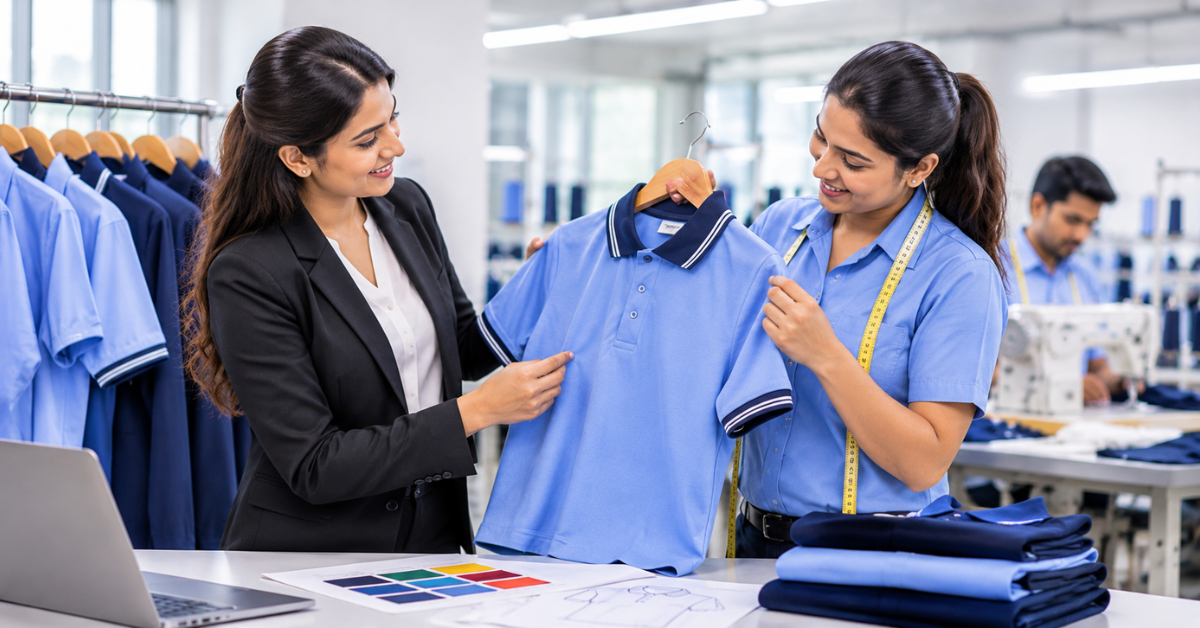
Readymade vs Custom Uniforms India: Which Is Better for Your Business?
- Last Updated at: Nov 12, 2026
- 5 min read min read

Businesses comparing Readymade vs Custom Uniforms India need to consider more than appearance and purchase price. Employee comfort, branding, order quantities, delivery schedules, and replacement requirements all influence the decision. Mafatlal Uniforms offers uniform solutions for different business requirements. This guide explains the differences between readymade and customised uniforms, helping organisations select an approach that suits their workforce and budget.
What Are Readymade and Custom Uniforms?
Readymade uniforms are pre-designed garments available in standard sizes, colours, and styles. Businesses can select suitable products without developing an entirely new design.
Custom uniforms are produced or modified according to specific requirements, including fabric, colours, branding, garment construction, and sizing.
When evaluating Readymade vs Custom Uniforms India, businesses should first identify whether standard garments meet their operational needs.
Readymade vs Custom Uniforms: Key Differences
|
|
|
|
|
|
|
|
|
|
|
|
|
|
|
|
|
|
|
|
|
|
|
|
|
|
|
|
|
|
|
|
For businesses purchasing off-the-shelf workwear India, readymade garments may offer a convenient option when requirements are straightforward.
When Should Businesses Choose Readymade Uniforms?
Readymade uniforms can suit organisations requiring standard garments within a limited timeframe.
They may be appropriate for:
- Small employee teams
- Temporary staff requirements
- Standard office clothing
- Urgent replacement orders
- Businesses with limited customisation needs
However, available sizes, colours, and fabrics may not match every organisation’s requirements.
Mafatlal Uniforms can be considered by businesses exploring uniform options for different employee roles.
When Are Custom Uniforms a Better Choice?
Custom uniforms may be suitable for organisations seeking a distinctive brand identity or specific garment features.
Businesses may prefer customisation when they require:
- Company-specific colours
- Embroidered logos
- Department-wise designs
- Specialised fabric requirements
- Consistent uniforms across locations
For example, a hotel chain may need coordinated uniforms for reception, housekeeping, and restaurant employees.
The bespoke uniform cost India depends on fabric selection, design complexity, branding, order quantities, and production requirements.
Understanding Minimum Order Quantities
Minimum order quantity, or MOQ, is an important factor when selecting customised uniforms.
The uniform MOQ India may vary according to the supplier, fabric availability, garment design, and customisation requirements.
Businesses should confirm:
- Minimum quantity per design
- Minimum quantity per colour
- Size-wise ordering requirements
- Additional branding charges
- Repeat-order conditions
These details help organisations estimate costs before approving production.
Compare Delivery Timelines Carefully
Delivery schedules can influence the choice between readymade and custom uniforms.
Readymade garments may be available sooner when suitable stock exists. Custom garments generally require time for sampling, approvals, production, and dispatch.
When evaluating uniform turnaround time India, procurement teams should confirm realistic delivery dates rather than relying on general estimates.
Mafatlal Uniforms can be explored by organisations planning structured uniform requirements across departments.
Common Mistakes to Avoid
Businesses should avoid:
- Comparing only garment prices
- Ignoring fabric quality
- Ordering without size confirmation
- Skipping custom garment samples
- Assuming every supplier has identical MOQs
- Overlooking replacement requirements
- Finalising orders without delivery confirmation
A careful Readymade vs Custom Uniforms India comparison should include both immediate purchasing needs and long-term operational requirements.
FAQs
1. Are readymade uniforms cheaper than custom uniforms?
Readymade uniforms may have lower initial costs because they use standard designs. However, the final bespoke uniform cost India depends on fabric, branding, design complexity, and quantities. Businesses should compare complete quotations rather than assuming one option is always cheaper.
2. What is the minimum order quantity for custom uniforms in India?
The uniform MOQ India varies between suppliers and garment specifications. Custom fabrics, colours, or embroidery may influence minimum quantities. Businesses should confirm design-wise and colour-wise requirements before placing an order, particularly when purchasing for smaller employee teams.
3. How long does it take to manufacture custom uniforms?
The uniform turnaround time India depends on design approval, fabric availability, order quantity, production schedules, and delivery location. Businesses should request a confirmed timeline that includes sampling, manufacturing, quality checks, and dispatch.
4. Are readymade uniforms suitable for corporate employees?
Yes. Off-the-shelf workwear India can be suitable for corporate employees when standard garments meet the organisation’s dress code, comfort, and sizing requirements. Businesses should check fabric quality and availability before selecting readymade uniforms for larger teams.
5. How should businesses decide between readymade and custom uniforms?
Businesses should evaluate workforce size, branding requirements, budget, fabric needs, delivery schedules, and replacement planning. Readymade uniforms may suit standard requirements, while customised garments can offer greater design flexibility and brand consistency across departments.
Conclusion
The Readymade vs Custom Uniforms India decision depends on business requirements, budgets, branding, quantities, and timelines. Readymade garments offer convenience, while custom uniforms provide greater flexibility. Mafatlal Uniforms can be considered by organisations evaluating practical and professional uniform solutions for their employees