How Custom Branded Industrial Workwear Improves Safety Compliance Audits
- Last Updated at: Sep 17, 2026
- 6 min read min read

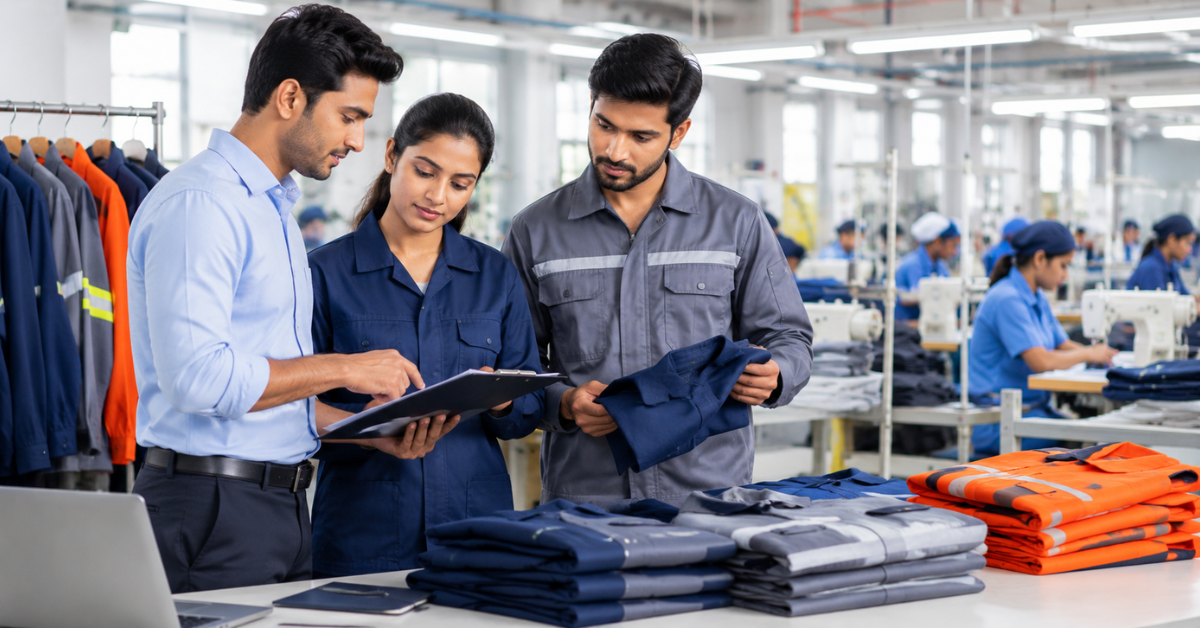
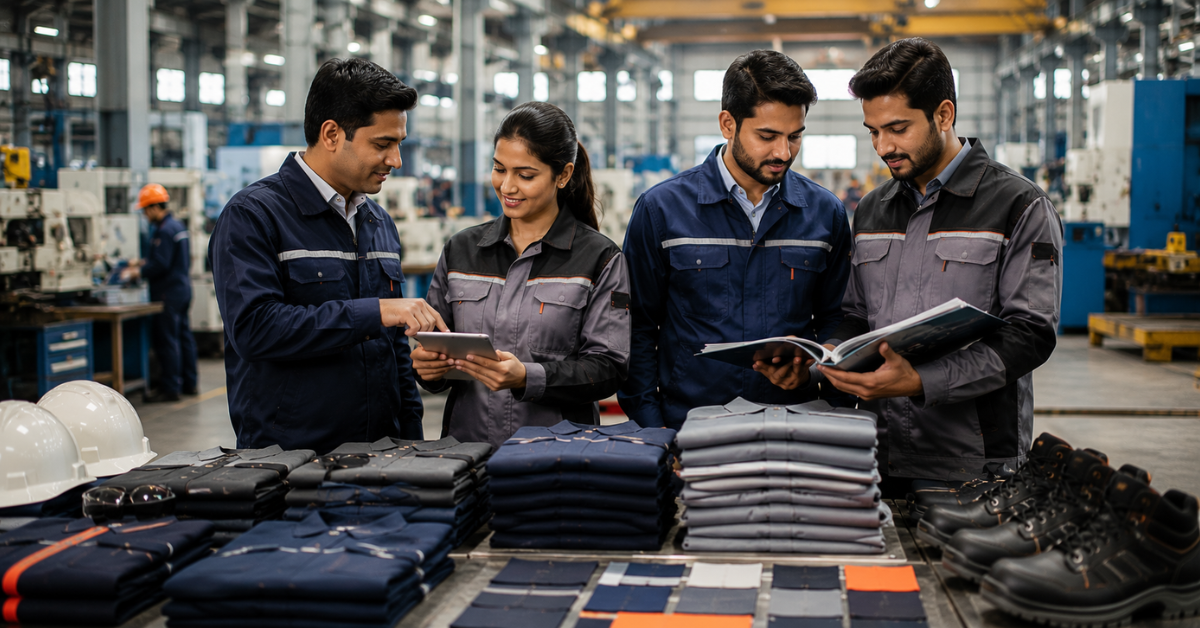
During a factory safety audit, small inconsistencies can become highly visible. Workers wearing the wrong uniform, missing identification, or using garments unsuitable for their roles can make compliance harder to manage. Mafatlal Uniforms supports businesses with uniform solutions designed around different industrial requirements. Well-planned branded industrial workwear can help organisations create clearer workforce identification, standardise workwear, and make internal safety processes easier to monitor. This guide explains how uniform branding can support better audit readiness without treating clothing as a substitute for proper safety systems.
What Is Branded Industrial Workwear?
Branded industrial workwear refers to uniforms designed for industrial environments that also carry company-specific elements such as logos, colours, department identification, or employee roles.
Unlike ordinary promotional clothing, industrial uniforms should be planned around the employee's actual working conditions. This means industrial uniform branding should be considered only after factors such as job role, movement, workplace hazards, fabric requirements, and applicable safety standards are understood.
A structured uniform programme can help organisations maintain consistency across large factory teams.
How Can Branded Workwear Support Safety Audits?
Safety audits generally involve much more than checking uniforms. Auditors may examine procedures, equipment, training, documentation, PPE use, workplace conditions, and employee practices.
However, branded industrial workwear can support the process in several practical ways.
1. Makes Workforce Identification Easier
Custom workwear with company logo can help distinguish employees from visitors, contractors, vendors, and other people entering an industrial facility.
For a large manufacturing unit with hundreds of workers, clear identification can make access control and workforce management more organised.
2. Helps Differentiate Departments
Factories may use colours, patches, labels, or other visual identifiers for departments such as maintenance, production, engineering, warehouse, and quality.
This type of industrial uniform branding can make it easier for supervisors to recognise whether employees are working in their assigned areas and wearing the expected uniform.
3. Supports Uniform Standardisation
When employees independently choose work clothing, consistency becomes difficult to maintain. A standard uniform programme defines what employees in each role are expected to wear.
Custom workwear with company logo can become part of that standardisation by creating a consistent garment specification for particular teams.
Branding and PPE Compliance Are Not the Same
One important distinction is that a company logo does not make a garment protective.
PPE compliant uniforms should be selected according to the hazards identified for a specific role and the applicable standards or workplace requirements. The required garment specifications may vary significantly depending on whether employees face heat, flame, electrical, visibility, chemical, mechanical, or other workplace risks.
Therefore, industrial uniform branding should never interfere with protective features or required markings.
When selecting PPE compliant uniforms, safety specifications should come first and branding should be incorporated only where appropriate.
How Workwear Can Improve Audit Readiness
A consistent workwear programme can make routine internal checks easier before an external audit takes place.
|
|
|
|
|
|
|
|
|
|
|
|
|
|
|
|
|
|
|
|
|
For example, if maintenance technicians are assigned a specific uniform, supervisors can more quickly identify an employee wearing an incorrect garment before work begins.
This is where branded industrial workwear can support everyday compliance habits rather than becoming something addressed only before an audit.
Choosing a Workwear Supplier for Factories
Selecting a workwear supplier for factories requires more than comparing garment prices. The supplier should first understand the workforce, working conditions, quantity requirements, sizing, branding needs, and expected replacement cycles.
Businesses should discuss:
- Job roles and departments
- Workplace conditions and identified hazards
- Fabric and garment requirements
- Size ranges
- Logo placement and branding
- Order quantities
- Replacement requirements
- Repeat-order consistency
A workwear supplier for factories should also be given clear specifications for any protective requirements rather than being asked for a single uniform to cover every role.
Why Consider Mafatlal Uniforms?
Mafatlal Uniforms works across professional and industrial uniform requirements, where factors such as durability, fit, workforce identification, branding, and role-specific functionality can influence garment selection.
Organisations exploring custom workwear with company logo can consider Mafatlal Uniforms when developing a more standardised uniform programme. For industrial buyers, consistency across initial orders and future requirements is especially important when multiple departments or locations are involved.
Mafatlal Uniforms can also be considered when businesses require an experienced workwear supplier for factories for broader workforce uniform planning.
Common Mistakes to Avoid
One common mistake is treating branding as proof of safety compliance. A logo improves identification, but it does not confirm that the garment meets the protective requirements of a particular task.
Businesses should also avoid:
- Using identical uniforms for roles with different hazards.
- Placing branding where it affects required safety features.
- Ordering without checking employee sizes.
- Ignoring garment maintenance and replacement cycles.
- Assuming PPE compliant uniforms replace other required PPE.
- Waiting until an audit to check uniform compliance.
The best approach is to make workwear management part of everyday safety procedures.
FAQs
Does branded industrial workwear improve safety compliance?
Branded industrial workwear can support compliance by improving employee identification, uniform standardisation, department recognition, and routine monitoring. However, branding itself does not make a workplace compliant. Safety depends on risk assessments, appropriate PPE, training, procedures, maintenance, and applicable regulations.
Can a company logo be added to industrial uniforms?
Yes, custom workwear with company logo can be developed for industrial teams where suitable. Logo placement should be planned carefully so that branding does not interfere with protective elements, visibility features, required labels, or the functionality of the garment.
What are PPE compliant uniforms?
PPE compliant uniforms are garments selected to meet relevant protective requirements for identified workplace hazards where the garment is classified or required as PPE. The exact specifications depend on the task, risk assessment, applicable standards, and employer requirements.
How does industrial uniform branding help large factories?
Industrial uniform branding can help factories distinguish departments, employees, contractors, and specific work groups. Clear visual identification may also make routine supervisory checks easier, especially across facilities with large workforces and multiple operational zones.
What should factories check when choosing a workwear supplier?
When choosing a workwear supplier for factories, businesses should consider garment quality, role-specific requirements, sizing, customisation, order quantities, repeat-order consistency, delivery capability, and any required protective specifications. Price should be evaluated alongside the complete uniform requirement.
Conclusion
Custom branding does not replace safety procedures, PPE assessments, or compliance documentation. Its value lies in making industrial workwear more structured, identifiable, and consistent across the workforce.
Well-planned branded industrial workwear can support everyday uniform monitoring and make safety audit preparation more organised. When branding is combined with role-specific garment specifications, clear internal policies, and appropriate protective requirements, it becomes a practical part of a broader workplace safety programme